

Introduction
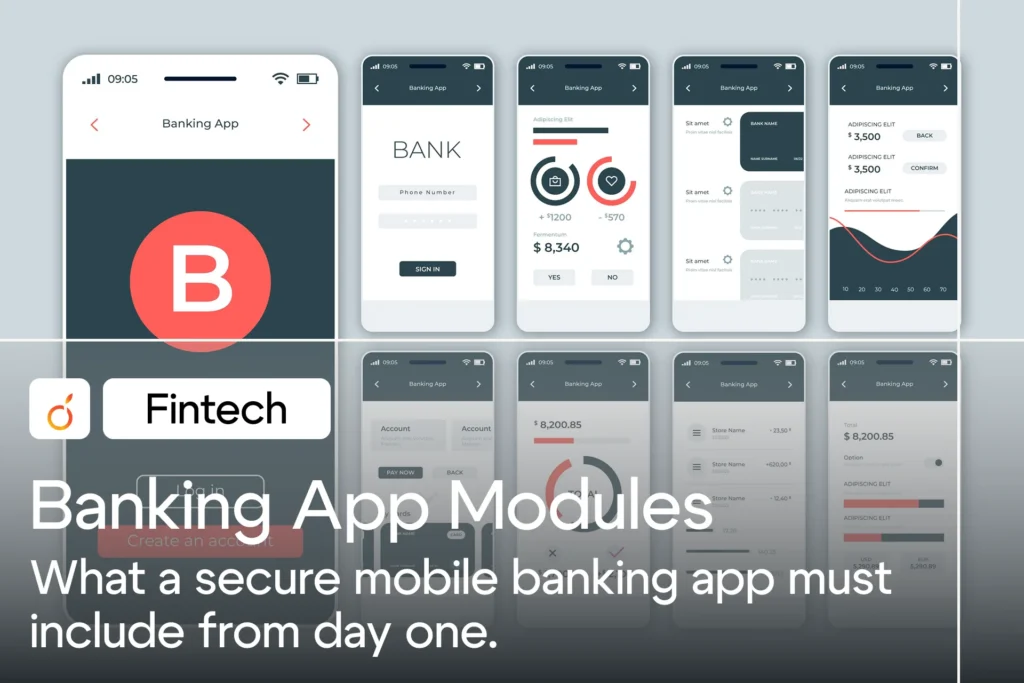
In general, a successful mobile banking product will provide more than an attractive front end (i.e., user interface) that displays users’ current balance(s). Rather, it is a product built upon trust. Users typically rely on their mobile banking app to perform multiple functions, including checking direct deposit salary payments, moving money between different accounts, freezing/locking their debit and/or credit cards when they suspect fraud, confirming that payment(s) have been made, contacting the bank’s support team, and managing their sensitive banking and/or personal information. Every single screen, every single action that takes place behind the scenes, and every single decision that goes into releasing an updated version of the mobile banking product are therefore much more heavily weighted than they would be for virtually any other consumer-facing product.
Founders or new product leaders who are in the process of developing a mobile banking application will be affected by this reality on some level (even if they don’t realize it) as they go about the process of designing the application. They must create a banking application that feels simple to the end users; however, the back end of the application must be designed accurately, securely, and must be able to undergo thorough evaluation for regulatory compliance. Additionally, a mobile banking application’s design should not only be modern in appearance, but also should minimize potential risks related to ongoing operations, facilitate future growth, and assist your company’s resources in quickly responding to issues when they arise.
We at Appricotsoft try to maintain this balance: we encourage teams to move quickly when appropriate, but we will also not create ghost-risks in order to present you with a functional demo. This philosophy is reflected in the way we approach software development. We build high-quality products that we take pride in, and we strive to be examples of what people should expect from great software development. Our Unison Framework is based upon this same principle: AI can aid in facilitating execution, but people own their results, decisions, and quality.
This article outlines the core modules most banking apps need, the minimum security baseline you should expect before launch, and the audit trails that matter if you want to operate with confidence rather than hope.
The important role of module planning in banking
Throughout the majority of digital products, teams can typically begin with minimal (MVP) functionality and build on it over time. In the mobile banking space, this can cause costs to grow rapidly. The reason for this is simple: modules are not independent functions. For example, accounts affect transactions, transactions affect notifications, cards affect support, transfers affect fraud control, and settings affect authentication, trust on device, or support journeys.
When module decisions are made too broadly, teams may end up with:
- inconsistent user permissions
- incomplete event history
- weak support tooling
- unclear transaction state
- poor handling of failed payments or retries
- and security mechanisms that are ‘bolted on’ after architecture decisions have been made.
Because of this, a good mobile application development process in fintech must start with a clear definition of product modules and their functions; not just from a user interface perspective, but also from a background process perspective, logging processes, and reviewing requirements for operations teams.
If you are planning on larger-scale fintech initiatives, the related post Fintech App Development Roadmap: MVP to Scale will provide you with an overview of how the sequence of delivery impacts trust-building and compliance, as well as larger-scale solutions.

The Importance of Module Planning in Banking
With many types of digital products, product teams are able to launch a thinner MVP and then keep adding additional work as time evolves; however, this method can become costly very quickly in the Mobile Banking area. The reason is that modules may not exist as discrete stand-alone items when building mobile banking systems (e.g., accounts impact transactions; transactions impact notifications; cards impact customer service/support; transfers impact fraud controls; and settings impact authentication, device trust,t and customer recovery journeys).
When product development teams make loose decisions about a module, the result is often the following:
- Inconsistent user permissions
- No event history maintained
- Weak support tooling
- Unclear transaction states
- Poor error handling/retries for payment failures
- Security controls are added by default, and post-architecture decisions are made.
This is why, when developing a custom mobile application product in the finance category, it is very important to begin the development process with a clear product module definition and its associated responsibilities. Product module definition includes not only how the user perceives the product (i.e., in front of the user), but what is happening behind the scenes (e.g., logging of actions) and information that the Operations staff will need to review at a later time (e.g., transaction history).
If you are looking to take a broader view of Fintech-related initiatives, we recommend reading our article: Fintech App Development Roadmap: from MVP to Scale, which showcases how a delivery roadmap can impact a financial institution’s ability to build trust, deliver compliant products or services, and ultimately scale their respective organizations.
The core modules of a mobile banking app
1. Accounts Module
The Accounts Module (the base of the product and all other Banking Modules or Service modules). The accounts module usually consists of:
- current and savings account overview,
- current and available balance,
- transactions completed and/or in progress,
- account details, i.e, IBAN or Routing data,
- account statements,
- and joint and/or foreign currency account support (sometimes).
Although the accounts module appears simple in design, this module actually provides answers to the following core questions:
- Is the balance displayed “current,” or is it delayed?
- Does the balance show pending card authorizations?
- Are credits and debits settled, pending, reversed, ed or under review?
- Can the user export statements without risk?
- Can the Support Team recreate information as seen by a customer at a specific point in time (date and time)?
The Account Module is also critical to determining how account data flows into the Mobile Banking experience. In some products, the Mobile application is strictly a Read layer off the Banking Core. In others, it is a Complete Action layer orchestrating transactions with various Ledger transactions. The Design decision made here has significant implications for how quickly an action is processed, when the data is reflected in the Transaction Ledger, how much data collection is required for auditing purposes,ses and data reconciliation.
For Bank Executives, the key question is much different than “Are users able to see their balance?” “Can you validate anything was done and when it was done, and provide an explanation as to why the customer saw what they saw?”
2. Module of Transactions
The transactions module is where trust can be built or lost. It typically consists of:
- transaction history
- search and filter capabilities
- transaction details
- merchant information
- status indicators supporting pending/completed
- category
- entry-point for dispute/support
An example of a weak implementation would be treating transaction history like a long list. An example of a strong implementation would be building transaction history as an explanation system so users can fully understand their history, without needing to guess or be confused. When looking at your transaction history, users should be able to easily understand if their card has been charged or just authorized, if their bank transfer was initiated, processed, or rejected, or whether their refund has been completely processed or is still in process.
From an operational perspective, transactions should be tied back to immutable identifiers and state changes. This will allow for investigation of incidents, provide an explanation for actions that fail, and eliminate chaos from customer support due to users reporting “money disappeared,” when in fact the transaction is still pending.
This is also an area of the architecture that requires thought about idempotency, retrying by providers, and handling duplicate events. Each of these decisions is made at a level of the architecture slightly below the transactions module, but directly affects how users experience the transaction feed.
3. Cards Module
The Cards module is often one of the most utilised parts of the application because it offers customers direct access to managing their own cards. Typical functionality available to a customer in the Cards module may include:
- Viewing physical and/or virtual cards
- Freezing and/or unfreezing cards
- Activating new cards
- Setting spending limits
- Managing online and international usage of cards
- Revealing the card number securely when allowed to do so
- In some cases, generating disposable virtual card numbers
This module must be intuitive, fast, and very well secured. Actions that involve freezing, unfreezing,g or revealing card numbers must be protected via strong authentication rules based on both risk and session state. A poorly secured Cards module provides significant exposure for fraudulent activity. A poorly designed Cards module creates user panic because customers often access this module when they are experiencing significant stress (e.g., suspected fraud, lost card).
An additional general rule: any action that materially changes card availability or exposes cardholder account data should have both logical and physical security protection, and all activities associated with sensitive actions should be logged with sufficient context to facilitate later review.
4. Transfer Module
Transfers are typically considered the riskiest type of interactivity within a product. The various types of transfers include:
- Transfers between owned accounts,
- Domestic bank transfers,
- International transfers,
- Peer-to-peer transfers,
- Scheduled transfers,
- Recurring payments, and
- Beneficiary management.
The need for clear state management, definitive confirmations, fraud checks, limit management, and accurate recovery capabilities is paramount in this module. “Transfer Failed” message alone would not suffice for users; the system must have knowledge of request status such as whether or not the request was never initiated, is pending confirmation from the provider, has been completed but due to human error needs to await further review by the user, etc…
The biggest mistake in product design with respect to the transfers module is attempting to convey that transfers are performed synchronously when, in fact, the underlying ecosystem does not work that way. Delays could come from any of the banking rails, provider’s api executions, performing KYC verifications, screening for sanctions, or awaiting all other external approvals before proceeding with the requested actions of the user. This is where your application should be upfront and truthful. In the world of fintech, being transparent may appear to result in delays; however, in reality will build more trust than providing an illusion of certainty.
For a further related opinion on how the user experience (UX) will either create or detract from consumer confidence in financial services through UX patterns that help build confidence through confirmation patterns, progress indicators, and more clarity within messaging of the current status will reduce confusion when performing payment type transactions or completing verification transactions, in our previous post entitled “UX Patterns That Build Trust”.
5. Supporting Module
Few people understand how valuable support is when designing a mobile app. Banking is a great example where support is integral to the product and not just an afterthought. The support functions usually incorporated into a mobile banking app include:
- In-app chat/messaging
- Secure ticket creation
- Starting a dispute
- Accessing the FAQ and help center
- Escalation paths
- Linking user-identified issues back to their associated data, such as transaction IDs, etc.
By designing the support module so that there is reduced friction, the customer should receive the most amount of support during their most sensitive times. For instance, when a customer calls to dispute a transaction, or reports that their debit card is blocked, or that they have an unauthorized transaction, the app should automatically contain the existing reference materials to quickly start the resolution process. This will help to eliminate most of the back-and-forth exchange with your support team and shorten the resolution time.
Another important factor in creating a mobile banking app is compliance and governance. The design of a secure support flow should take into account that customers will not send sensitive information to/through insecure channels (email) and direct or guide them to use structured interactions that provide a record of what has taken place.
6. Settings Module
The settings module may be more strategic than it appears. Usually includes the following:
- personal info
- notification preferences
- trusted devices
- language and region preferences
- security settings
- change password/passcode
- biometric preferences
- document access
- closure or modification of the account per circumstance.
Many of the account takeover risk vectors are found in this module. Any changes made regarding email, phone number, passwords, biometrics, and/or trusted device relationships should be secured via step-up authentication (verified user before granting access) and have robust audit logging (to ensure that changes made occurred correctly). In addition, the application should separate low-risk preferences and high-risk identity/recovery preferences within this module. By doing this, there will be a more straightforward UX, and security controls applied that will be significant.
7. Notification Module
Notification modules are not only for engagement, but also form a layer of security and trust in banking institutions (such as receiving an alert for a transaction completed or when your card was used, or when you login from a new device, notification telling you the status of a transfer, notification about the status of a support case and notification letting you know that you need to complete an action).
Good notifications are timely, specific, with just enough information for action to be taken in relation to either fraud or a failed transaction. Poor notifications do the opposite; they create an unnecessarily noisy environment, provide sensitive data visible from lock screens of mobile devices, and fail to provide clear instructions(i.e., vague).
The module should also provide delivery channels based on the required speed of sending the notification. For example, push notifications are best for sending notifications in a very quick manner. While in-app messages assist with providing longer-term tracking.
The minimum security baseline for mobile banking app development
A banking app does not need every advanced control on day one, but it does need a serious baseline. Industry standards such as OWASP MASVS exist to help teams define secure mobile requirements, and NIST’s digital identity guidance is also useful when shaping authentication and assurance decisions.
Here is the practical baseline we recommend for a production-ready mobile banking app.
Strong authentication and session controls
At a minimum, the app should support:
- MFA is required by the product and regulatory context.
- device binding or device trust concepts where appropriate,
- secure session management,
- short-lived tokens with safe refresh patterns,
- re-authentication for sensitive actions,
- and protected recovery flows.
Sensitive actions should not rely on “the user is already logged in” as the only control. Revealing card details, adding a beneficiary, changing recovery data, disabling biometrics, or approving a high-value transfer should trigger stronger checks.
Secure credential and secret handling.
Credentials and tokens should never be stored carelessly on the device. Use platform-approved secure storage, minimize secret exposure, and avoid embedding secrets in the app package. Certificate or network trust decisions should be made deliberately, not left to defaults without review. OWASP MASVS explicitly frames baseline mobile security requirements around secure storage, authentication, networking, and code protection.
Encryption in transit and at rest
This is the minimum expected baseline, but teams still get it wrong in practice. Sensitive data should be encrypted in transit using modern TLS configurations, and sensitive server-side data should be encrypted at rest according to your infrastructure and compliance requirements. Just as importantly, you should minimize what is stored on the device in the first place.
Authorization that goes beyond the login state
Every sensitive action must check what the user is allowed to do, not just whether they are authenticated. This matters especially for business banking, delegated access, joint accounts, admin roles, and support-assisted actions.
Fraud-aware controls
Not every product will launch with a full fraud engine, but baseline controls should still include:
- velocity checks,
- unusual-device or unusual-session signals,
- transfer limit logic,
- Repeated failed-attempt monitoring
- and alerts for suspicious events.
Fraud defenses should be visible in the product only where useful. Internally, however, they must be explicit and reviewable.
Secure release and operational discipline
Security is not just an app-layer feature list. It also depends on release discipline. Under the Unison Framework, quality is expected in day-to-day delivery through code review, updated tests where reasonable, QA pass for relevant scope, clear demo readiness, and release checklists rather than “we will fix it after launch.” That kind of operating model matters in banking because rushed releases create trust debt quickly.
If you want a complementary security perspective, our post Secure by Design: Building Fintech Apps the Right Way expands on secure SDLC thinking for fintech products.
Audit trails necessitated from day one
A banking application with little to no auditability is highly vulnerable.
This checklist outlines the audit trail requirements that the C-Level Founders and their teams should impose.
Events of user authentication and access
Logging events of authentication and access should include:
- Successful and unsuccessful logins.
- Multi-Factor Authentication challenges and their results.
- New device registration and registered device removal.
- Password and/or passcodes created or changed.
- Biometric capabilities are enabled or disabled.
- Session expired, cancelled, or revoked.
- Account locking out due to consecutive unsuccessful logins.
Events of changing high-risk settings
Logging events of changing high-risk settings should include:
- Email and/or phone number changed.
- Beneficiary added and/or edited.
- Transfer limit changed.
- Notification code changed.
- Trusted device added, edited, or removed.
- User-recoverable setting changed.
- User consent changed in relevant product areas.
Events of money movement
Logging events of money movement should include:
- Transfer created (in good standing) and/or invalid.
- Validation failure occurred (reason).
- Transfers are approved (step #).
- Found to be fraudulent / rule triggered (reason).
- Submitted transfer to provider.
- Provider response to transfer request.
- Transition states.
- Cancellation requests for transfers.
- Transfer reversals.
- Final settlement confirmed or rejected.
Events of card control
Logging events of card control should include:
- Card being frozen or unfrozen.
- Card controls on / off (Internet, International).
- Pin-based workflow (if applicable).
- Card unlock (request to see card details).
- Virtual card created.
- Action of suspected fraud on a user’s card.
Events of customer service and administration
Logging events of customer service and administration should include:
- Creation of cases.
- Agent responses to cases.
- Manual adjustment of the account.
- Internal escalation of cases.
- Administering functions relating to customer service, access, or any transaction.
- Reviewing the document based on a research process (extended data relating to customer service).
Events of the system and integration
Logging events of the system and integration should include:
- Failures of external API (gateway) requests to a system.
- Retries were generated to perform a function in the system.
- Webhook requests received (for external provider integrations).
- Duplicate processing of events by the system.
- Processing timeouts occurred while processing events.
- Failures at downstream sites where events were completed or acknowledged.
The purpose of logging is not to collect everything possible. It is to collect the right evidence in a structured way. Audit trails should be searchable, timestamped, tamper-resistant, retained according to policy, and scoped so investigators can reconstruct a story without guessing.
One practical rule we often use: if an action can affect money, access, identity, or customer trust, it probably deserves a clear audit event.
Issues Teams Encounter with Banking Products
Even seasoned teams can trip up when developing banking products. The majority of failures are not catastrophic security breaches but rather unintentional design mistakes that will ultimately lead to large expenses down the road.
Examples include:
- Creating modules as standalone screens instead of having them as part of a connected operational system that all communicate with one another.
- Treating transaction status as part of the User Interface (UI) rather than part of the transactional model.
- Skipping “Step-up” authentication for sensitive operations.
- Underestimating the need for support and admin tools.
- Logging too little to allow for investigation into incidents.
- Logging too much with no organization would make review of logs more difficult rather than easier.
In addition to the aforementioned issues, another common problem is designing for the happy path of today only. What happens after a transaction in the sandbox works? What happens after the card freeze toggle in a demo is functioning? When a provider times out, a customer reinstalls the application, a customer’s mobile number changes, or customer service must explain a disputed transaction 3 weeks later? At that point, mature banking products distinguish themselves from promising prototypes.
How we approach this at Appricotsoft
Here’s how we develop mobile banking applications:
Appricotsoft believes that developing a successful mobile banking application is about much more than just creating an MVP by loading it with the maximum features possible; it is also about identifying the right modules, clearly defining the responsibilities, and supporting product simplicity through operating discipline.
This is why we follow these principles:
- Provide visible delivery through weekly demos
- Establish clear backlog items and acceptance criteria
- Create explicit decision logs and risk tracking
- Build quality controls into our normal delivery methods
- Have open discussions regarding trade-offs between scope, budget, and timeline
Accordingly, our core principles align with those of our business: we keep it real (honesty), take responsibility for our actions (outcomes), maintain a curiosity about who we are (curiosity), and strive to produce quality work (genuinely good work vs. just completed) so that our clients have access to a supplier, rather than simply a supplier who can provide an iOS app development company, an Android app development company, or a cross platform app development company, who are all capable of delivering screens.
We take partnering seriously and understand that the three critical aspects of developing strong mobile banking applications must work in conjunction with each other; they are trust, clarity, auditability, and discipline in delivering results. The following target keywords are relevant in this area: mobile app development company, mobile app development services, custom mobile app development, mobile banking app development, and app development cost estimate.
Final thoughts
Having a module-heavy banking application does not always mean it will work well; instead, what defines a good banking app is the interaction between those modules in a secure, comprehensible, and auditable manner.
Think of the modules you would expect a banking application to have as being: Accounts, Transaction History, Cards, Transfers, Support, Settings, and Notifications. In addition to the aforementioned modules, each module needs to meet or exceed a strong security baseline that includes: strong authentication requirements to gain access to the application, secure storage of data, carefully managed authorization for transactions or other security sensitive actions, encrypted data flows between all parties, appropriate fraud controls in place, and strict discipline regarding when and how software is released into production. Lastly, you need to collect and maintain adequate audit trails of the actions taken by your application so that your organization can provide meaningful answers when its users, regulators, partners,s or other stakeholders require an explanation.
This is how the foundation for a trustworthy fintech product is created. By clearly establishing the product’s security architecture and what is expected of each of the required modules, the fintech partner has created a clear path for communicating their product development to the outside world.
If you are looking to develop or rollout a banking or fintech product and are searching for a partner who will provide you with the strategy, design, development and rollout expertise required for achieving success in your banking or fintech application, then Appricotsoft can help you establish the baseline for each of the relevant modules, the necessary security requirements for each module, and the appropriate delivery method for all of your banking or fintech applications. Appricotsoft builds software that they are proud of and believes that a successful software development process should provide a clear, responsible, and long-lived solution.