

Introduction
A hotel application functions not only as an electronic catalog of products/services offered at the property, but also serves as the working relationship between guests and hotel employees.
Guests will be able to have access to their arrival instructions, make requests for additional towels, order room service, submit a maintenance request, book spa appointments, upgrade their room, or send a message to the front desk.
Employees will utilize the administrative tools connected to the application to monitor and complete guest requests and develop a complete understanding of what services/products are most requested by guests.
Hotel executives and management need clear metrics/analytics to help them quantify successes or opportunities to improve operations, especially in reference to the hotel application.
Quantifying operational performance without established KPIs leads hotel management to make assumptions or guesses regarding the level of guest satisfaction; the amount of time hotel employees have saved as a result of using the hotel app; the effectiveness of upsell techniques; the percentage of guests using the hotel app; the rate of completion of guest requests, or whether using the hotel app provides an additional avenue for hotel employees to receive messages from guests.
Establishing a comprehensive KPI and instrumentation plan will assist hotel executives and management with their measurement processes.
Working with a hospitality software development company creates additional challenges with respect to measurement. The majority of hotels fail to develop measurement metrics before the completion of software application development, which oftentimes results in missing key event data, creating flawed data, or failing to connect hotel guest behavior with hotel management’s operational metrics.
The optimum times to define proposed measurement plans are during the initial discovery and planning phases of the application development process, before any features are developed.
If you are still mapping the full guest journey, you may also find this helpful: Guest Experience App for Hotels: How to Map the Guest Journey and Find Real Value. It explains how to identify where the app can create measurable value across pre-arrival, arrival, stay, and post-stay moments.
Why measurement is important in Performance Apps for Hotels
When evaluating a Performance App for Hotels, the evaluation criteria must not be limited to the number of features or the polish of the interface the guest experiences. If guests don’t use the app, staff don’t trust the app, or the app cannot demonstrate that it improves revenue or operations, the app is doomed to failure, regardless of how attractive it appears visually.
The question is really quite simple:
Are we providing the guest with a better experience, and can we provide proof of that?
As hotel founders, operators, and C-level executives, you need to be aware of the fact that Hospitality SaaS products are the hub of a working operation. They reach every department, including front office, housekeeping, food and beverage, maintenance, payment, upselling, guest communication, and sometimes all properties simultaneously.
Due to this wide scope of influence, there cannot be a single metric of measure and thus must use more than one form of metric than just a vanity-type metric such as app downloads. An appropriate measurement plan will consist of as many different data points as possible, connecting guest satisfaction, operational efficiency, guest usage, and revenue generation.
In this article, we will identify the Best 5 Key Performance Indicators (KPIs) to evaluate performance on a Hotel Performance Ap,p which are:
- NPS and CSAT
- Fulfillment Time
- Staff Workload
- App Adoption
- Rental Revenue from Upsells
We will also provide a practical approach to developing an Analytics plan (instrumentation) to build an Analytics program that will help hotel groups make better decisions instead of drowning in all their data.
At Appricotsoft, this fits closely with how we approach hospitality products: build useful software, keep delivery transparent, and focus on outcomes that matter in real operations. Appricotsoft’s own vision is to build software that is simple, useful, and something the team can proudly say, “We made this.”
1. NPS & CSAT, Metrics to Measure Guest Satisfaction
The first KPI area should provide an answer to the question:
Are guests happier?
Two of the ways that you can find out if guests are happy are
NPS and CSAT
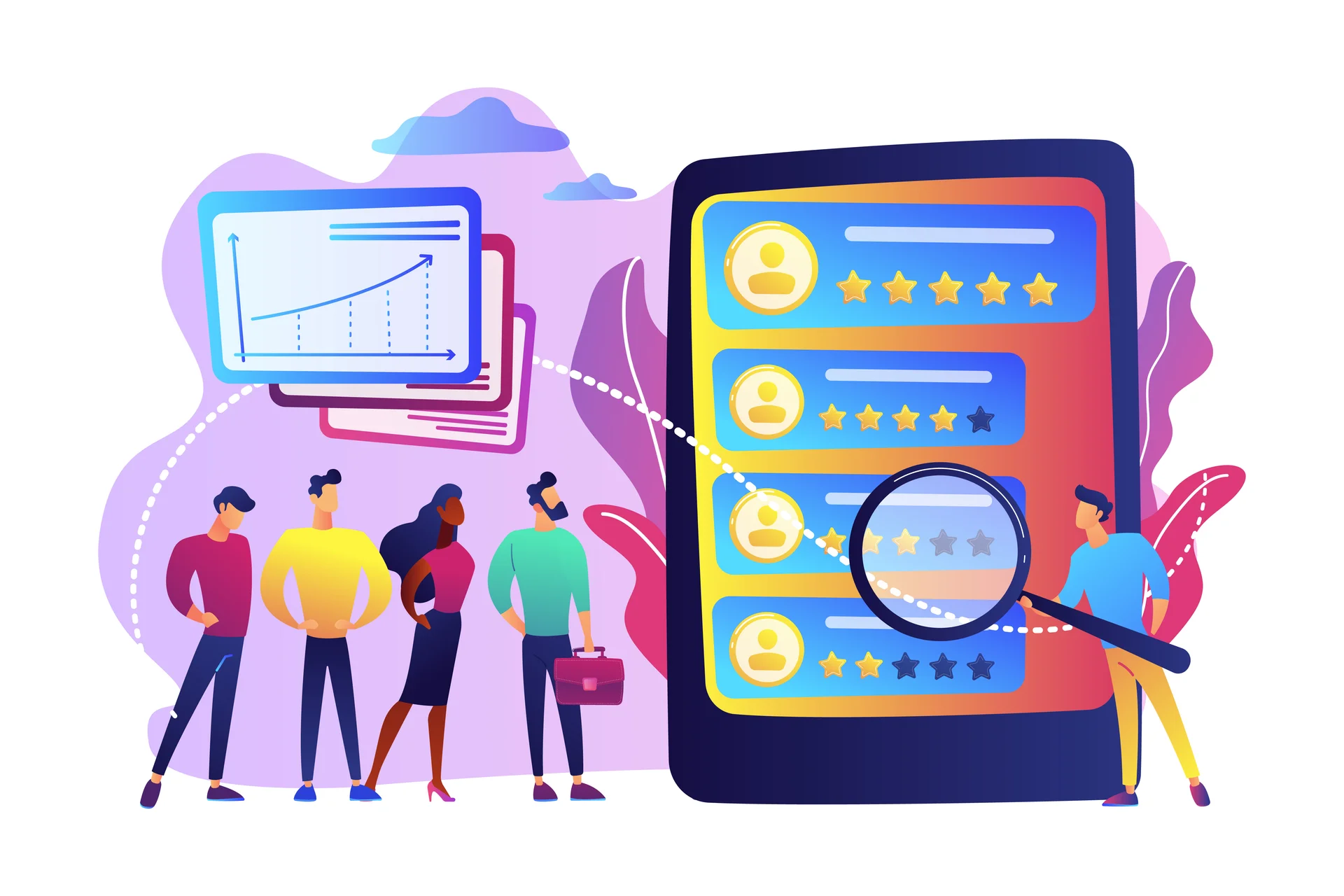
NPS, or Net Promoter Score, measures a guest’s likelihood of recommending your hotel/brand to others. It is typically based on the question:
“How likely are you to recommend us to a friend or colleague?”
The range for their answer is from 0 to 10. According to Medallia, NPS is an index ranging from -100 to 100 that can measure the likelihood of recommending, as well as a metric for satisfaction and loyalty.
NPS is a great metric for use within hotel apps because it reflects the total experience and is not reflective of one transaction. However, if a guest enjoyed the room but had a bad experience with the app, NPS alone would not provide an accurate reflection of guest satisfaction; therefore,e it is necessary to also track other metrics that are more specific to the app and services.
CSAT or Customer Satisfaction Score is a better way to understand the level of satisfaction after a guest has had a specific interaction with a service.
For example:
- How satisfied were you with your room service order?
- How satisfied were you with the check-in instructions?
- How satisfied were you with the response time?
- How satisfied were you with the in-app support chat?
CSAT is usually measured on a 1-5 or 1-7 scale.
For a digital concierge app, CSAT is often more actionable than NPS because it can be attached to specific flows. If room service has a low CSAT score, the hotel can review the menu, delivery time, communication, or kitchen workflow. If check-in instructions score poorly, the team can improve content, timing, or localization.
How to Instrument Satisfaction
A practical setup could include:
- Post-stay NPS survey sent after checkout.
- CSAT prompt after completed service requests.
- CSAT prompt after support chat resolution.
- Optional comment field for qualitative feedback.
- Property, room type, guest segment, and stage are reporting dimensions.
The key is not to overload the guest. Ask for feedback at meaningful moments, not after every tap.
A good rule: if the guest has just completed something important, ask one short question. If the guest is still trying to solve a problem, do not interrupt them.
2. Measuring Time Taken To Fulfill A Guest's Request
One of the best incentives for hotels to have an app designed for their guests is to lessen the barriers involved in making service-related requests.
Guests shouldn’t have to keep calling the front desk 3 times to ask for more towels. Employees shouldn’t have to re-write service requests made to them via telephone calls, WhatsApp messages, sticky notes or conversations they had with the guest at the hotel reception desk.
As such, request fulfillment is always a key performance indicator.
What You Need To Measure
The basic formula for determining request fulfillment time is:
Request Fulfillment Time = Time When Request Was Completed – Time When Request Was Created
In hospitality, it can be helpful to break this down into multiple steps:
- The amount of time that passes from the time that this request is made to the time that the staff member acknowledges that they have received the request.
- The amount of time that passes from the time that the staff acknowledges having received a guest’s request until the request is assigned to a specific staff member.
- The amount of time that passes from the time the request is assigned until the time that the request has been fulfilled.
- The total time passed between the time that the request was created and the time that the request was fulfilled.
- The number of requests that were reopened or were unable to be fulfilled.
By breaking it down in this manner, hotel management can identify where delays have occurred.
For example, if acknowledgement times are fast but completion times are slow, this can indicate that the bottleneck of fulfilling the request is related to staff levels or operational capacity levels.
Request Types Should Be Segmented
Not all requests can be treated the same way.
A towel request, a maintenance issue, a request for a late check-out, a request for transportation to the airport, or a food order should not have the same level of service expectation.
There are several good categories to segment requests into:
- Housekeeping
- Maintenance
- Room service
- Front desk
- Concierge
- Transportation
- Spa or Wellness
- Billing
Each category should have its own expected response and completion time.
This turns the app into more than a guest-facing product. It becomes a source of operational insight.
3. Staff Workload: Determining if The App Will Assist the Team
An app for a hotel should not complicate the lives of the staff
The only thing worse than an application for a hotel being difficult or frustrating to use is a hotel application that does not address the hotel staff’s needs.
This is also a very common problem when developing a digital transformation of a healthy business through software development.
Digital clutter does not qualify as digital transformation.
Staff Workload KPIs
The following data is needed to measure the impact on staff as a result of the implementation of the application so that the organization can provide the highest level of service to guests:
- Request by each hotel department
- Number of requests completed per staff member / shift
- Average time taken to acknowledge and complete tasks
- Number of manual follow-ups
- Number of duplicated requests
- Number of escalations
- Amount of time spent answering common repetitive questions
- Number of calls to the front desk related to requests for things supported by the application
For example, applications that provide answers to common arrival questions (where do I park, what is the Wi-Fi password, when is breakfast, where do I find my invoice) will ultimately reduce the number of common repetitive questions directed towards the front desk by guests.
Measure Staff Sentiment Too
Staff feedback is often ignored when measuring the success of an application.
To evaluate the success of an application when measuring the effectiveness of the application:
- Does the application make it easier for you to do your job?
- Are the requests complete enough to respond to?
- Are the notifications delivered timely?
- Are the guests better informed?
- Which features are challenging to understand?
Measuring these areas is not simply for the sake of doing so; it is to confirm the staff’s trust in the system will provide a better service to the guests. If staff members do not have faith in the system, they will not provide the same quality of service to the guests.
At Appricotsoft, we like practical, honest feedback loops because they keep projects grounded. This aligns with the company’s “Keep It Real” value: honesty, responsibility, transparency, and no guessing games.
4. Adoption of Apps: Measuring the True Use of Apps instead of Just their Downloads
Adoption of apps is one of the most misunderstood KPIs. While downloads are important, they do not provide any value. A guest may have downloaded the app because a staff member requested them to, opened it once and never returned to it again.
To really prove the app was adopted, the usage of the app by guests during their journey throughout the stay must be measured.
Adoption Metrics
For an app designed for hotels, measure the following:
- Download rate for hotels’ apps compared to the number of eligible guests
- Number of guests who activate an account or start a guest session
- Number of first actions taken by the guest in the app
- Number of guests using the app during various stages of their stay
- Number of different features used by guests at any point in their journey
- Percentage of guests who opted into push notifications
- Percentage of guests who used a deep link to open the app
- Percentage of guests who used the app more than once during their stay
- Percentage of guests who accessed post-stay engagement via the app
A guest experience app should measure adoption of an app based on moments in time and not only on sessions.
For example:
- Pre-arrival – Did the guest view their arrival instructions?
- Arrival – Did the guest use the check-in features or see if their room was ready?
- Stay – Did the guest enter any service requests or order amenities?
- Post-stay – Did the guest view their invoice, provide feedback on their stay, and join any loyalty programs through the app?
By evaluating guest experience apps through these specific moments, you can truly evaluate how useful the app is for the guest.
If a guest only uses the app prior to their arrival, it may not be useful during the duration of their stay.
For more on driving actual usage, you can also read Hotel App Adoption Playbook: How to Drive Real Usage.
5. Generating Revenue through Upsells - Commercial Impact Measurement
A hotel application can improve service and provide more revenue opportunities as well.
Common possibilities for upselling include (but are not limited to):
- Room upgrades
- Early check-in/ Late checkouts
- Breakfast package(s)
- Spa bookings
- Restaurant reservations
- Parking
- Airport transfers/shuttle services
- Local experiences
- Premium amenities
Upselling opportunities that occur within these types of services must create value for both the guests & ourselves, without any pressure, just like with any other type of business transaction. The most successful form of upselling occurs when the offer is provided at an appropriate time in relation to the guest experience and is relevant to their journey.
Examples:
- Providing transportation to/from the airport before arrival.
- Providing late check-out options closer to the end of their stay.
- Providing spa options during a weekend stay.
- Providing food service upon check-in or when guests arrive late at night.
- Providing family-friendly activities to guests travelling with young children.
Today’s revenue strategy for hotels has evolved beyond just room pricing and includes generating revenue from multiple touch points with guests, increasing automation and providing personalized service to guests. Mews suggests that revenue strategies for hotels encompass enhancing their revenues across assets and all points of interaction with guests.
Metrics to Track on Your Upsell Programs:
- # of Offer views
- # of Offer clicks
- # of Add to Carts / Request starts
- Conversion Rate
- Revenue per Guest
- Revenue per Occupied Room through App-Based Purchases
- Average Order Value
- Attach Rate per Guest Segment
- Cancellation / Refund Rate
- Staff Time to Fulfill Paid Services
It is essential to connect revenue generated from upsells to the operating side of the hotel. An upsell may have generated revenue, but if it has created an overload (or burden) on any of the departments (i.e. housekeeping, food & beverage, & front desk) who have to fulfill these requests, it could ultimately hurt the guest experience.
Attribute Revenue Properly
Hotels should avoid overclaiming app-driven revenue.
A good attribution model separates:
- Direct app revenue: purchase completed in the app.
- Assisted app revenue: the guest clicked or requested in the app, but payment happened elsewhere.
- Influenced revenue: the guest viewed an offer but booked through reception.
- Offline revenue: unrelated to the app.
This helps leadership understand what the app is truly contributing.
6. Instrumentation Plan: What to Track and How
KPIs only work if the product is instrumented properly.
Instrumentation means defining which events, properties, user states, and business outcomes should be captured by the app and backend.
Google Analytics describes events as specific interactions or occurrences that can be measured on a website or app. For hotel products, event tracking should be connected to business meaning, not just screen views.
Step 1: Define Business Questions
Before tracking events, define the questions you need to answer.
For example:
- Are guests using the app before arrival?
- Which features reduce front desk workload?
- Which requests take the longest to complete?
- Which upsells convert best by guest segment?
- Are notifications helping guests complete tasks?
- Where do guests abandon important flows?
- Which property performs best after rollout?
These questions guide the analytics plan.
Step 2: Create an Event Taxonomy
An event taxonomy is a structured list of events your product should capture.
Examples:
- app_opened
- guest_session_started
- reservation_linked
- arrival_instructions_viewed
- check_in_started
- check_in_completed
- service_request_created
- service_request_acknowledged
- service_request_assigned
- service_request_completed
- chat_started
- chat_resolved
- upsell_offer_viewed
- upsell_offer_clicked
- upsell_purchased
- notification_received
- notification_opened
- csat_submitted
- nps_submitted
Each event should have clear properties.
For example, service_request_created could include:
- property_id
- reservation_id
- request_type
- stay_phase
- channel
- priority
- guest_segment
- language
- timestamp
Do not collect unnecessary personal data. Track what supports decision-making.
Step 3: Connect Frontend, Backend, and Operations
Many teams only track what happens in the app interface. That is not enough for hotel software.
A guest request begins in the app but is completed in the operation.
That means instrumentation should include:
- Guest-side actions.
- Backend request status changes.
- Staff dashboard actions.
- PMS or POS integration events are relevant.
- Payment or upsell completion events.
- Notification delivery and open events.
For example, if the guest taps “request towels,” the system should track request creation. When staff acknowledge it, that should be tracked too. When housekeeping completes the request, that should also be tracked.
Only then can the hotel measure fulfillment time accurately.
Step 4: Build Dashboards for Roles
Not everyone needs the same dashboard.
A general manager may need:
- NPS and CSAT trends.
- Adoption by property.
- Request fulfillment performance.
- Revenue from upsells.
- SLA compliance.
A front desk manager may need:
- Open requests.
- Delayed requests.
- Requests by category.
- Shift workload.
- Escalations.
A marketing or revenue manager may need:
- Offer views.
- Conversion rates.
- Revenue by segment.
- Notification CTR.
- Campaign performance.
A product owner may need:
- Funnel drop-offs.
- Feature usage.
- App crashes.
- Onboarding completion.
- Retention during stay.
One dashboard for everyone usually becomes too noisy for everyone.
Step 5: Review Metrics Weekly During Rollout
Do not wait three months to inspect results.
During pilot rollout, review KPIs weekly:
- Are guests finding the app?
- Are staff handling requests correctly?
- Are notifications useful or ignored?
- Are there request categories with delays?
- Are upsells creating revenue without operational stress?
- Are guests giving feedback?
This is similar to how Appricotsoft’s Unison Framework uses weekly demos as a trust mechanism. The goal is to show working software, confirm decisions, and adjust direction before small issues become expensive rework.
Common Measurement Errors You Should Avoid
No one is immune to making measurement mistakes—even if you’re a pro hotel team! Here’s a short list of the more common measurement errors we’ve seen during a good measurement setup and beyond.
1. Measuring Downloads Only
The only thing you can measure by downloading is your app’s popularity. The real question is what other actions your app has caused guests to complete.
2. Measuring Revenue Only
Generating upsell revenue is great, but if the process frustrates the guests, you’ll end up losing them. Always link revenue metrics with other important metrics like customer satisfaction (CSAT), ‘opt-out’ rates, and support ticket complaints.
3. Ignoring Staff Pressure
Staffing pressures will negatively affect the guest experience. When measuring app usage, look at the impact on the staff working within the hotel, not just the guest experience.
4. Creating Too Many Events
If you try to track everything, your analytics will be rendered useless. Start with the business questions that are most important, and then define events.
5. Not Linking App Data to Operations
An app request is not complete when you submit it. An app request is only complete if the request is fulfilled.
6. Comparing Properties Without Context
While there might be different behavior/usage patterns for a resort vs. an airport hotel vs. a boutique property vs. an extended-stay property, be sure to segment the data carefully.
7. Ignoring Privacy and Consent
Make sure your guests understand what data is being stored and why. Analytics should always retain the customer’s right to privacy by storing only relevant and necessary data.
Commonly Asked Questions
What is the primary Key Performance Indicator for a Customer Experience Application?
There isn’t a single KPI that can be determined as a KPI; however, if you combine Customer Satisfaction, Customer Fulfilment Times, Employee Workload, Customer Adoption Rates & Revenue from Upselling, you will get an overall view of whether the Application is making the Customer Experience & Hotel Operations Better.
When can we measure impact after launching?
You can track Customer Adoption Rates & Use right away. You can also track Operational KPI’s, such as Customer Fulfilment Times, after the 1st few weeks of use. Satisfaction and Revenue trends will take some time and a minimum number of guests to be meaningful to track.
Should all Hotel Applications track upselling?
Yes, especially if the Application includes paid products & services. Completing Upselling Tracking will allow Hotels to determine which offers are successful and those that Customers ignore.
Do we need an elaborate Analytics Stack to track Customer Experience Metrics?
Not at this time. You need to have a well-formed Event Plan, Reliable Data Collection, and Web Dashboards that answer relevant business questions. Complexity can be found later as your needs regarding Data Collection evolve.
Who on the Team owns the KPI Agreement?
All Departments, including Leadership, Operations, Product & Developers should adhere to the KPI Agreement. If the KPI Agreement is only owned by the Technical Team, the Data will not be of value to the Operations. However, if the KPI Agreement is only owned by the Business Team, the Programming Team may not implement it correctly.
Assisting Hotels in Evaluating Guest Experience Impact with Appricotsoft
At Appricotsoft, measurements are not an isolated task to be done at the end of product development, but they should be included as part of the overall process of creating an app. For instance, KPI planning in the hospitality industry should include:
1. Starting With Business Outcomes
Before we define event types, we will first need to help clarify what success will look like for your property. Would you like to decrease calls to the front desk, improve guest satisfaction ratings, increase spa bookings, shorten service request response time, improve uniform multi-property visibility, or enable a new digital concierge experience? The answer to these questions will shape not only the product you intend to create but also the analytics that will be developed alongside it as well.
2. Mapping the Guest Journey
We will work with you to identify moments when value can clearly be measured to your establishment and that will ultimately tie to your guests’ experiences, including:
- Before guests arrive
- When checking in/out of your hotel
- While staying in your hotel
- When taping your service requests
- When receiving upsell offers
- When checking out of your hotel
The information above will focus on real operational processes at hotels, not just a long list of features to try to generate sales for a vendor.
3. Creating the Event Tracking Plan
We help define the types of events, properties, funnels, and dashboards that will be measured prior to the completion of the app’s development. This process allows us to integrate our analytics easily into your application and provide reliable results.
4. Connecting Guest Actions to Staff Workflow
An effective application does not just begin and end at the guest interface, but also includes the back-end function of routing
5. We Build With Quality and Transparency
Appricotsoft’s mission is to set a high standard for software development through quality, innovation, and trust. That is why we prefer visible progress, clear trade-offs, and honest reporting over black-box delivery.
With our Unison Framework, we use a clear delivery lifecycle, shared project artifacts, weekly demos, quality standards, and scope control so clients can see what is happening and make informed decisions.
6. We Help You Improve After Launch
The first version of a hotel app is not the end. Once real guests and staff use it, the data will show what should be improved next.
That may include:
- Simplifying onboarding.
- Adjusting notification timing.
- Improving request routing.
- Refining upsell offers.
- Reducing staff workload.
- Improving dashboards.
- Adding integrations.
The goal is not just to launch. The goal is to learn, improve, and build software that actually supports the hotel experience.
Conclusion
A Hotel Guest Experience Application should be intended for both improving the guest experience, supporting hotel staff, and providing the hotel with quantifiable business value.
To demonstrate this, hotels will need to have clear key performance indicators (KPIs) and an instrumentation plan from day one.
The best type of KPI for measuring hotel guest experience includes:
- Net Promoter Score (NPS) and Customer Satisfaction Score (CSAT) to measure guest satisfaction
- Average time taken to fulfill guest requests to measure operational efficiency
- Total workload of staff to measure the internal impact on the organization
- Total number of guests using the app to measure true app usage
- Revenue from upsells to measure commercial value to the hotel
These measures are only useful if they are used to inform actionable decision-making. The use of a dashboard that compares KPIs to identify areas requiring improvement or where guests are experiencing difficulty, what services are providing value to guests, and how workflow can be improved for hotel staff.
At Appricotsoft, we help hospitality organizations build apps that are functional, measurable, practical, and integrated into daily hotel operations. Whether you are interested in developing a hotel digital concierge app, hotel room service ordering app, hotel upselling app, or more extensive hospitality application platform, we work with our clients to identify the appropriate KPIs and build the applications based on those KPIs.
Let us work with you to create an application for hotels in which guests feel is beneficial and can confidently measure its success through the use of KPIs.