
Why a London hospitality startup came to Appricotsoft
Butler is a UK-based hospitality technology company with an unusually direct thesis: the hotel room phone is dead, and nobody has replaced it properly.
When the founding team brought the idea to us, the conversation moved fast — because we were not starting from zero. Appricotsoft has spent years building software for hotels, restaurants and tourism operators, so we already understood the operational reality behind the pitch: how a housekeeping shift is actually staffed, how an F&B order reaches a kitchen, why a night manager cannot take a call in Mandarin at 2 a.m.
That shared vocabulary is why this became a product partnership rather than a client–vendor engagement. Butler owned the vision and the market. We owned the architecture, the hardware, the AI stack and the delivery. We planned the product together from a blank page — including which physical devices to buy, how they would be provisioned, and how they would survive a real hotel corridor.
The problem: hotels sell services their guests never ask for
Hotels invest millions into restaurants, spas, concierge desks and room service. Then they place a beige telephone next to the bed and hope guests use it.
They don’t. Across the industry, the room phone has quietly become the least-used object in the room, for three compounding reasons:
- Language. A guest who is not confident in English will not call reception at all.
- Friction and wait time. Dial, hold, explain, repeat, hope it was understood.
- Social hesitation. Asking a human for “a little more sugar” feels like an imposition. Asking a second time feels impossible.
The commercial consequence is invisible, which is exactly what makes it dangerous. Demand that is never expressed produces no complaint, no bad review, and no data point. Hotel managers had zero visibility into what their guests actually wanted and silently gave up on.
Butler’s brief to us was to remove every single reason a guest doesn’t ask.
The solution: a voice AI concierge in every room
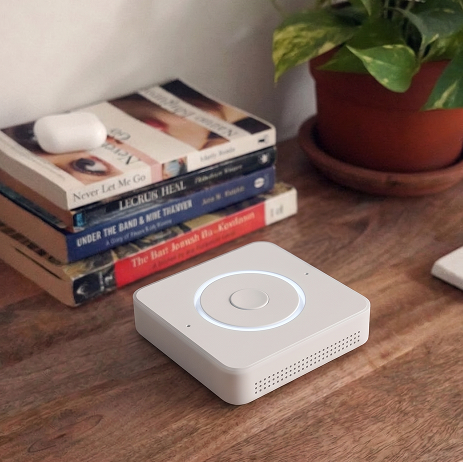
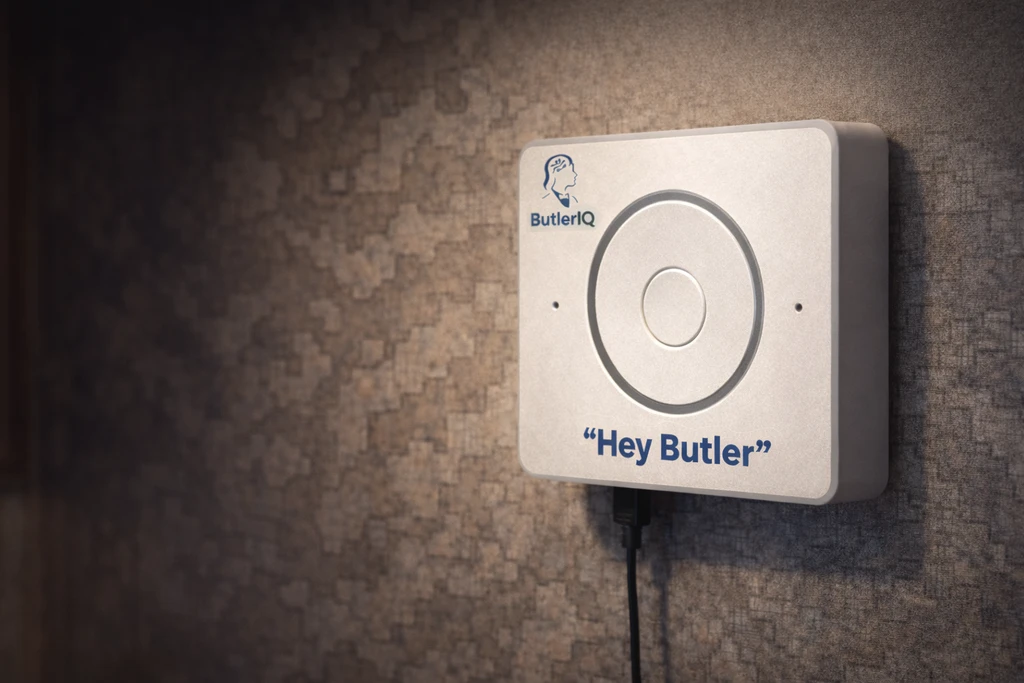
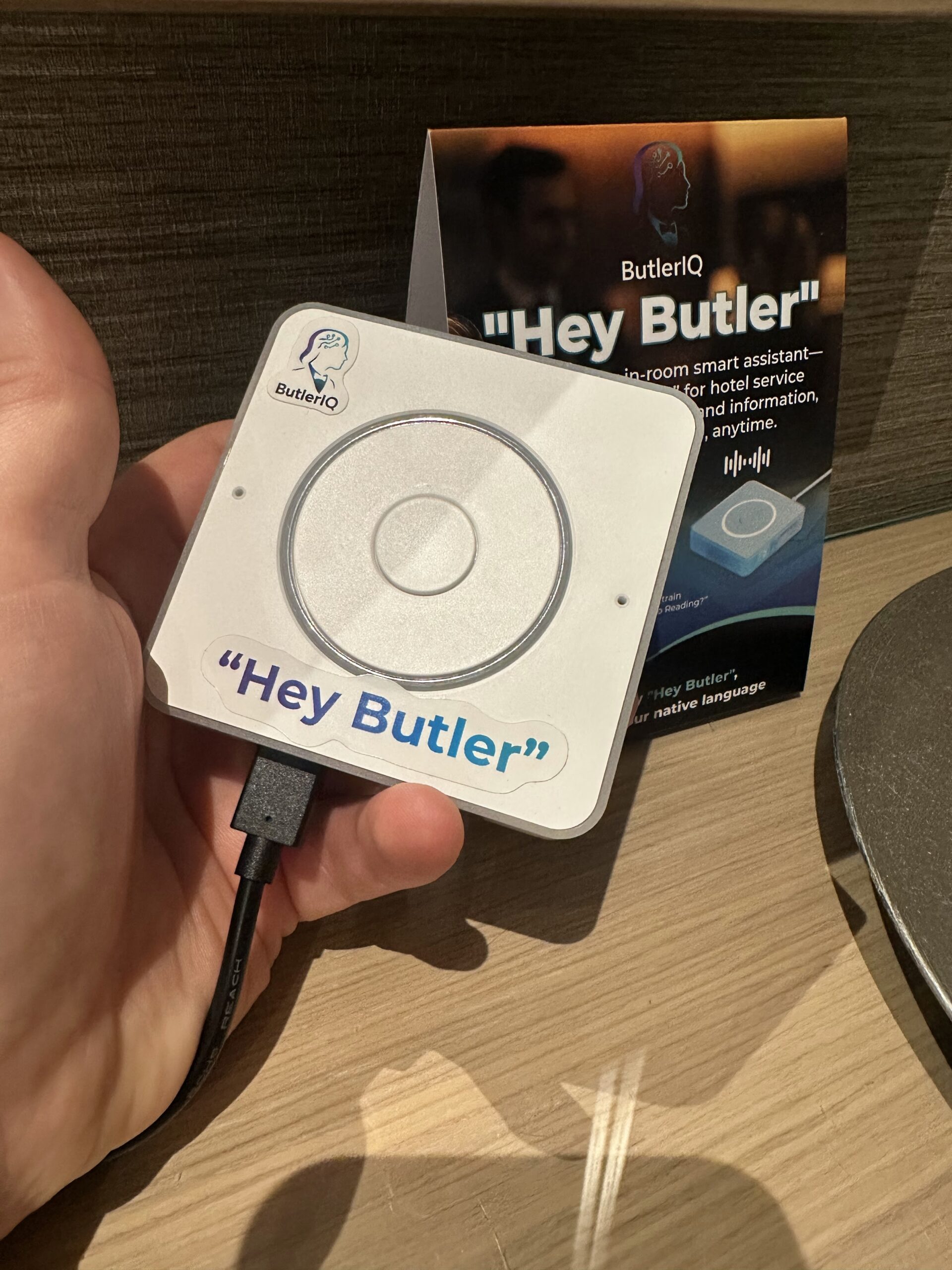
We engineered ButlerIQ — an AI concierge for hotels that lives in the room as a physical device, not as an app.
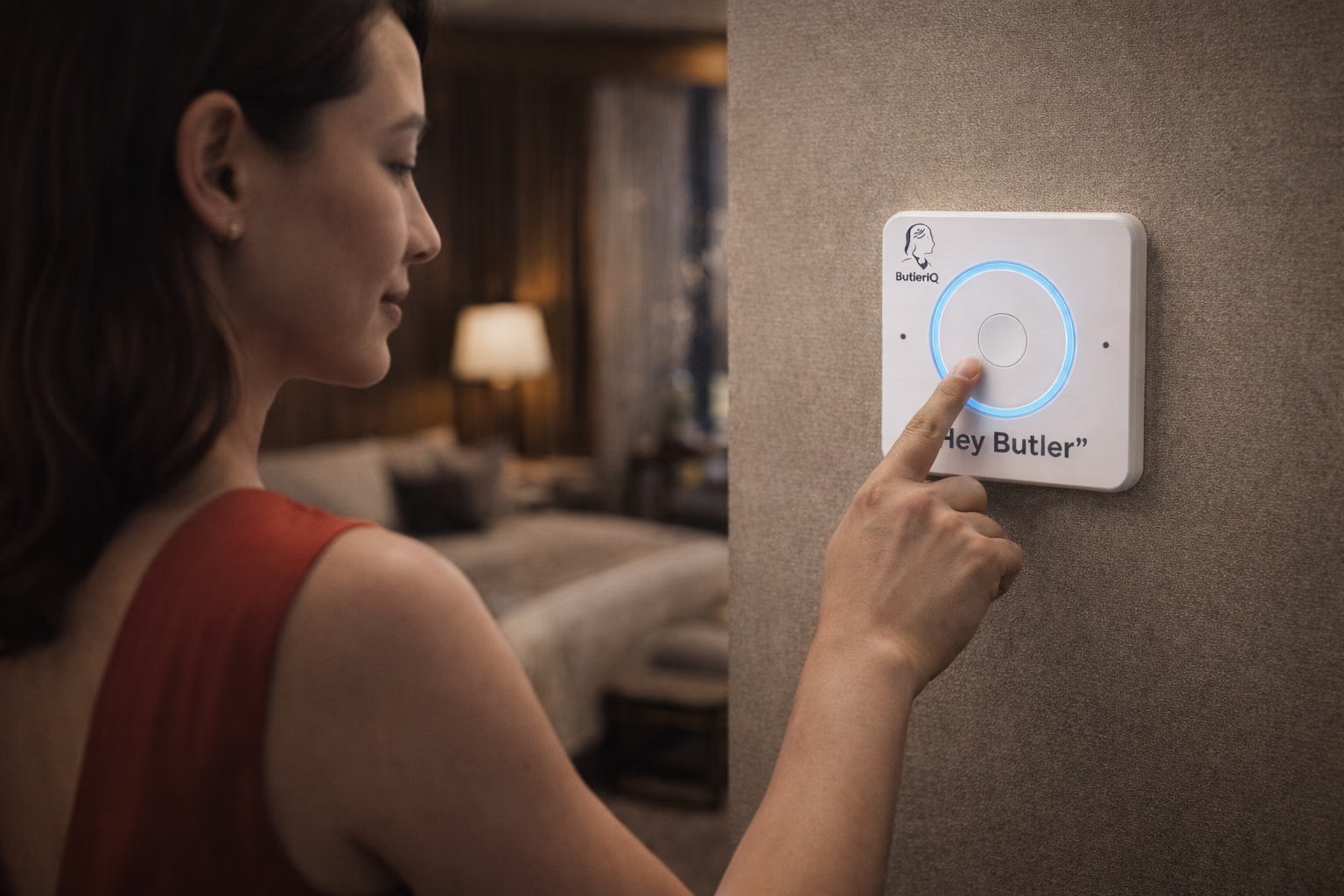
A guest says “Hey Butler”, or simply presses the button in the middle of the device, and speaks naturally in their own language. No download. No QR code. No account. No onboarding. The interaction is over in seconds, and the hotel’s operations team receives a structured, routed, actionable request.
Three tiers of guest interaction
Every utterance is classified into one of three intents, because each one has a completely different cost and latency profile:
- Informational queries — breakfast hours, Wi-Fi password, checkout time, pool location. Answered instantly from the hotel’s own knowledge base.
- Local recommendations — restaurants, museums, transport, what’s worth seeing nearby. The concierge experience, available at 3 a.m.
- Actionable requests — room service, housekeeping, taxis, late checkout, luggage assistance. These become real tickets in a real workflow.
The smart routing engine
A guest request management system is only useful if the request lands in the right hands with the right context. Behind the scenes, ButlerIQ classifies each actionable request and dispatches it automatically — extra towels to housekeeping, a late-night burger to the kitchen, a 6 a.m. airport run to the concierge desk — carrying the room number, the language, the timestamp and the original phrasing.
Staff never triage. They execute.
The upsell engine: revenue at the moment of intent
This is where a voice assistant stops being a convenience feature and starts being a commercial instrument. When a guest asks about the spa, that is the highest-intent moment of their entire stay — and historically it evaporated at the front desk. ButlerIQ surfaces the relevant offer right there, in the room, in the guest’s language: spa slots, dining reservations, room upgrades, late checkout.
The hotel isn’t advertising. It’s answering a question that was already asked.
Staff dashboard and admin console
We delivered the guest-facing device alongside two operational products:
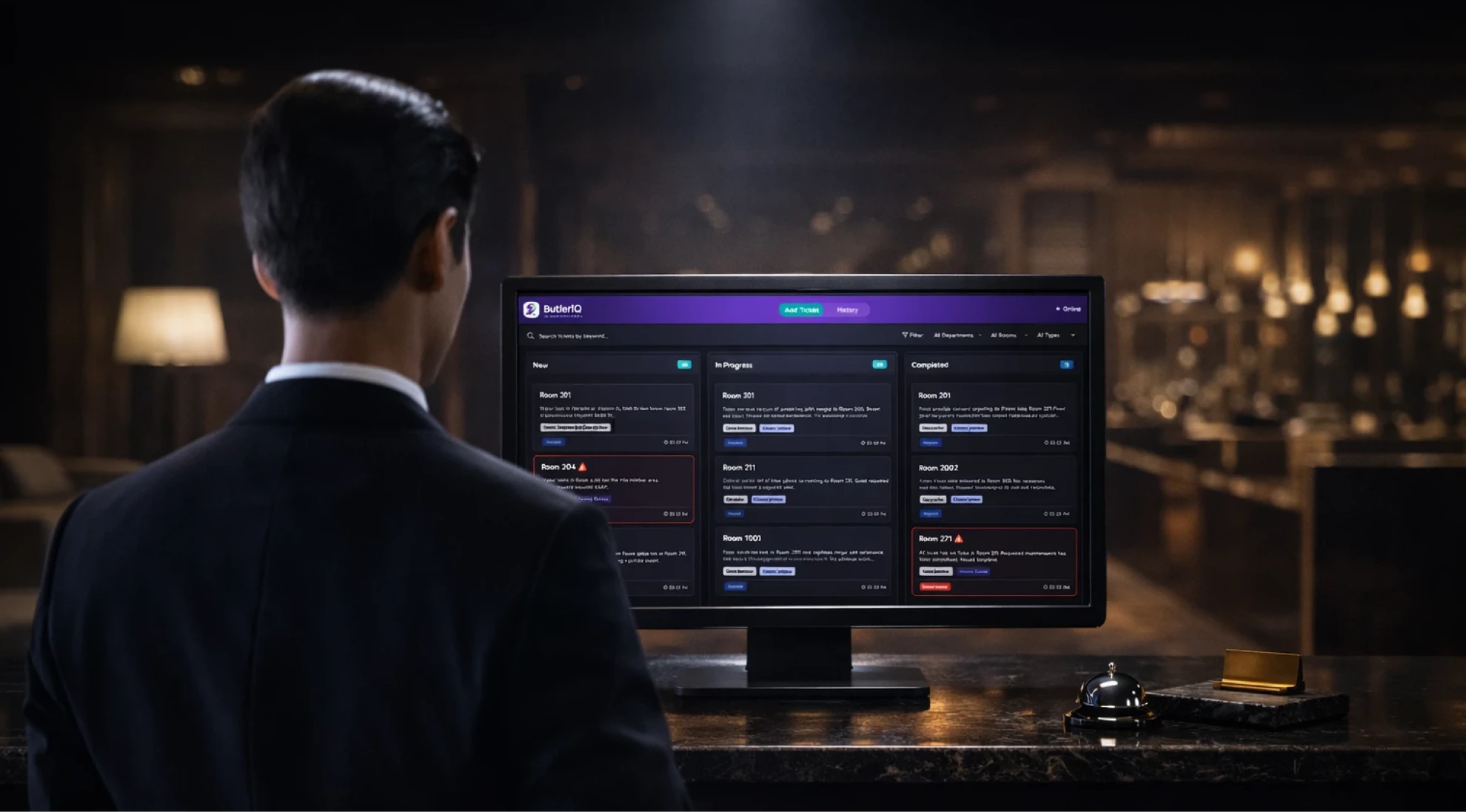
- Staff dashboard — a live queue of incoming guest requests, assignment, status and response times, designed to be usable by a housekeeping supervisor on a phone in a corridor, not by an analyst at a desk.
- Admin console — configuration of hotels, rooms, services and device behaviour. Hotel teams update their own information, menus and opening hours without a developer, and manage a single property or an entire portfolio from one place.
For the first time, management gained real-time analytics on request volume, peak demand hours, unmet requests and staff response times — the data layer the room phone never produced.
The hardest engineering problem was not the AI. It was privacy.
Guests will not accept an always-listening microphone in their bedroom. No amount of product polish survives that objection, and no hotel legal team will sign off on it. Under GDPR, a hotel bedroom is about as sensitive as an environment gets.
So we designed the system around a strict, three-tier privacy-first architecture:
- Tier 1 — on device. Wake-word detection runs entirely on the device itself. Until “Hey Butler” is spoken, nothing is transmitted anywhere. The device is not connected to a listening pipeline; it is listening for one word, locally.
- Tier 2 — on the local network. Common, predictable queries are resolved by a model running inside the hotel’s own network. The audio never leaves the building.
- Tier 3 — cloud. Only genuinely complex requests are escalated to cloud inference, and only the minimum necessary payload travels.
The practical result: private conversations in a hotel room never touch the internet. That is a sentence a hotel’s commercial director can say out loud to a guest, and it turned a compliance obstacle into a sales argument.
IoT engineering: making hardware behave like software
This was, at its core, an Internet of Things project. A cloud product that fails silently is an incident. A device in a paying guest’s bedroom that fails silently is a complaint at checkout.
Our scope covered the full physical-to-digital chain:
- Hardware selection. We evaluated and specified the in-room devices with the client — microphone array quality, far-field pickup in a room with soft furnishings, physical button, acoustics, power and placement.
- Fleet provisioning. Devices had to be commissioned in bulk and bound to a specific room, in a hotel, without an engineer per unit.
- Network resilience. Hotel Wi-Fi is hostile — captive portals, VLAN segmentation, weak coverage behind concrete. The system had to degrade gracefully rather than go dark.
- Device security. Encrypted transport, authenticated devices, and no path from a guest room device into hotel infrastructure.
- Remote monitoring and updates. Health telemetry and over-the-air updates, so a fix does not require walking into 200 occupied bedrooms.
60+ languages, zero friction
Multilingual support was not a feature on a roadmap — it was the point. A London hotel serves guests from dozens of countries every night, and the language barrier is precisely what kept the room phone unused.
ButlerIQ understands and responds in over 60 languages. A guest speaks Arabic, Japanese or Polish; the request arrives at the housekeeping dashboard in English, already structured. The hotel serves an international guest base without hiring for it.
The London pilot: what actually happened in the rooms
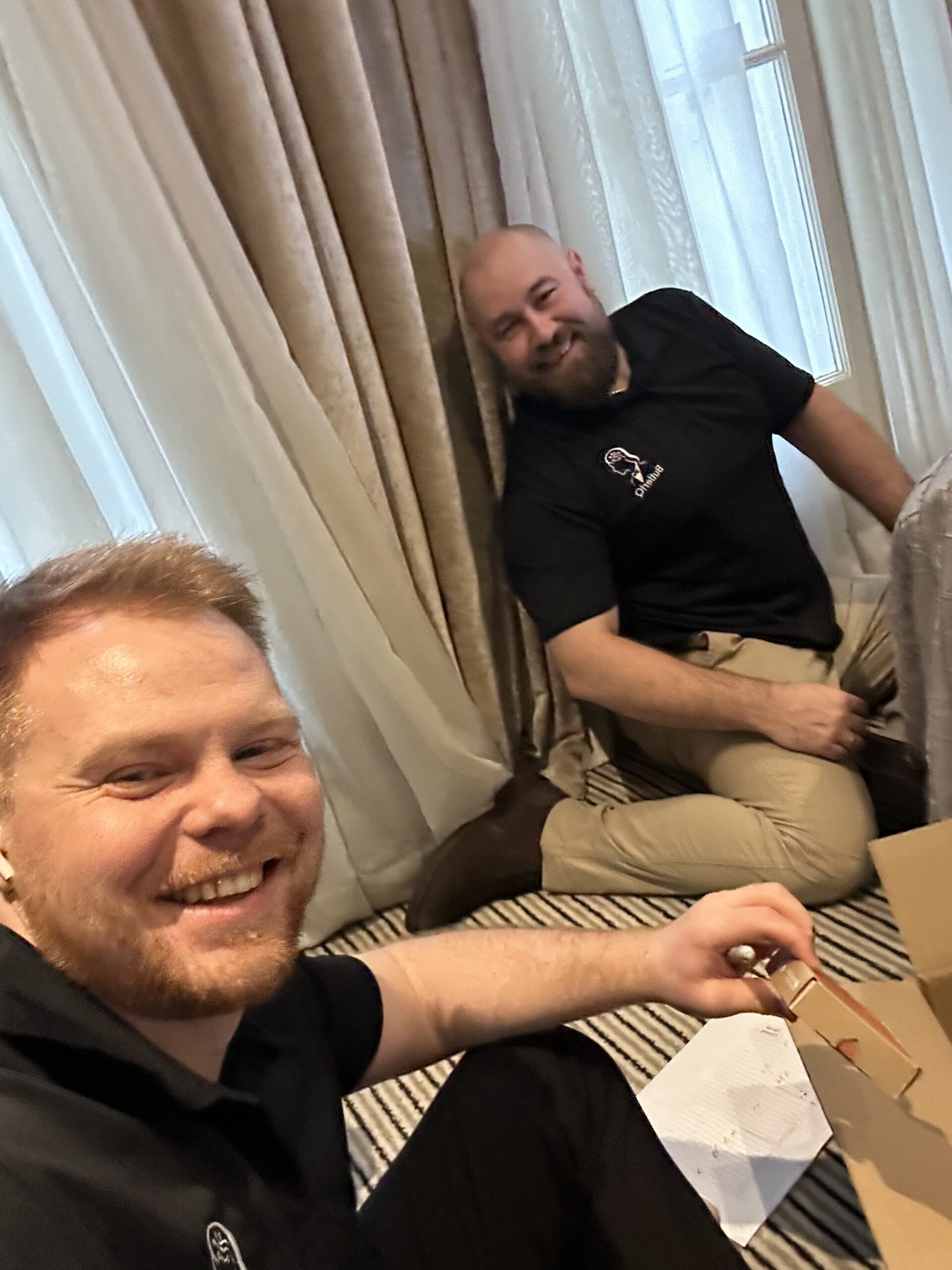
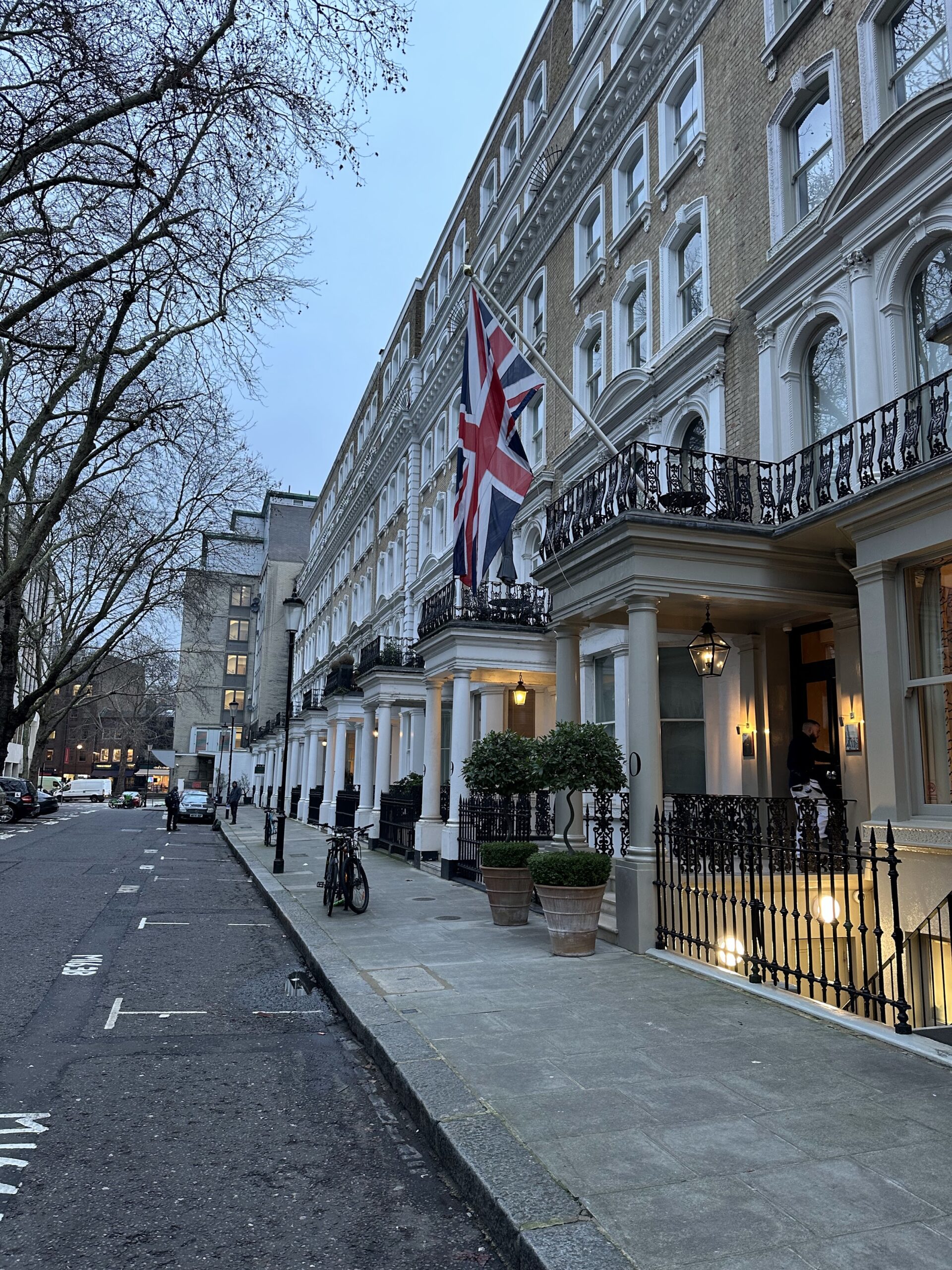
When the system was ready, we did not hand over a build and write a deployment guide. Our CEO flew to London to install, connect and test the devices on site, together with the client’s team, in a live property in Knightsbridge.
That decision mattered, because a hotel room teaches you things a staging environment cannot. But the part none of us expected was the guest reaction.
I watched guests ask for extra sugar. For more water. For someone to come and take their suitcases down. Small things — the exact things people never pick up a phone for. And several of them told us, unprompted, that they had never seen anything like it in a hotel before.
That is the whole thesis, demonstrated in a corridor. The demand was always there. The interface was the barrier.
The numbers agreed. On day one of the pilot, ButlerIQ processed 2× more guest requests than the room phone ever had, with an immediate lift in F&B orders and ancillary service usage — achieved with zero app downloads, zero registrations and zero guest onboarding.
Results
- 2× guest request volume versus the room phone, from day one of the London pilot.
- Immediate revenue uplift in F&B and ancillary services, driven by in-room upsell at the moment of intent.
- Zero-friction adoption — no app, no sign-up, no instructions, and therefore no adoption curve to climb.
- Reduced front desk workload, with routine requests routed automatically instead of queuing at reception.
- A new operational data layer — demand patterns, peak hours and response times that simply did not exist before.
- A fundable, demoable product. Butler moved from concept to a live pilot in a Central London property and into commercial conversations with hotels.
ButlerIQ is now running live pilots in Central London and has extended the same voice-first model into meeting rooms, where delegates request AV support and catering top-ups by voice — shortening turnaround between back-to-back bookings.
What Appricotsoft delivered
This project drew on the full range of our engineering practice, from silicon to dashboard:
- Product discovery and MVP development — scoping, architecture and roadmap from a blank page to a pilot-ready product.
- Voice AI and conversational AI development — wake-word handling, intent classification, multilingual understanding and response generation.
- Edge and on-device AI — local inference to satisfy privacy, latency and cost constraints simultaneously.
- IoT software development — device firmware integration, provisioning, fleet management, telemetry and OTA updates.
- Backend and API engineering — the routing engine, request lifecycle, and integrations with hotel systems.
- UX/UI design — for staff under time pressure, not for a product demo.
- Security and compliance engineering — GDPR-aligned data handling in one of the most privacy-sensitive environments there is.
- On-site deployment and pilot support — installation, testing and iteration in a live hotel.
Why this project matters to us
Most AI products are demonstrated on a laptop. This one had to work in a stranger’s bedroom, at 2 a.m., in a language nobody on the team spoke, on hotel Wi-Fi, without ever making the guest feel watched.
Getting that right required hospitality domain knowledge, IoT hardware engineering, applied AI and a genuine partnership with a founding team that knew its market. It is the kind of work we look for — and the reason ButlerIQ remains one of the products we are proudest of.
If you are building an AI concierge, a voice AI agent, a connected device product or an ambitious hospitality platform, we have already solved most of the hard parts once.